
03 Sep, 2026
Public Announcement
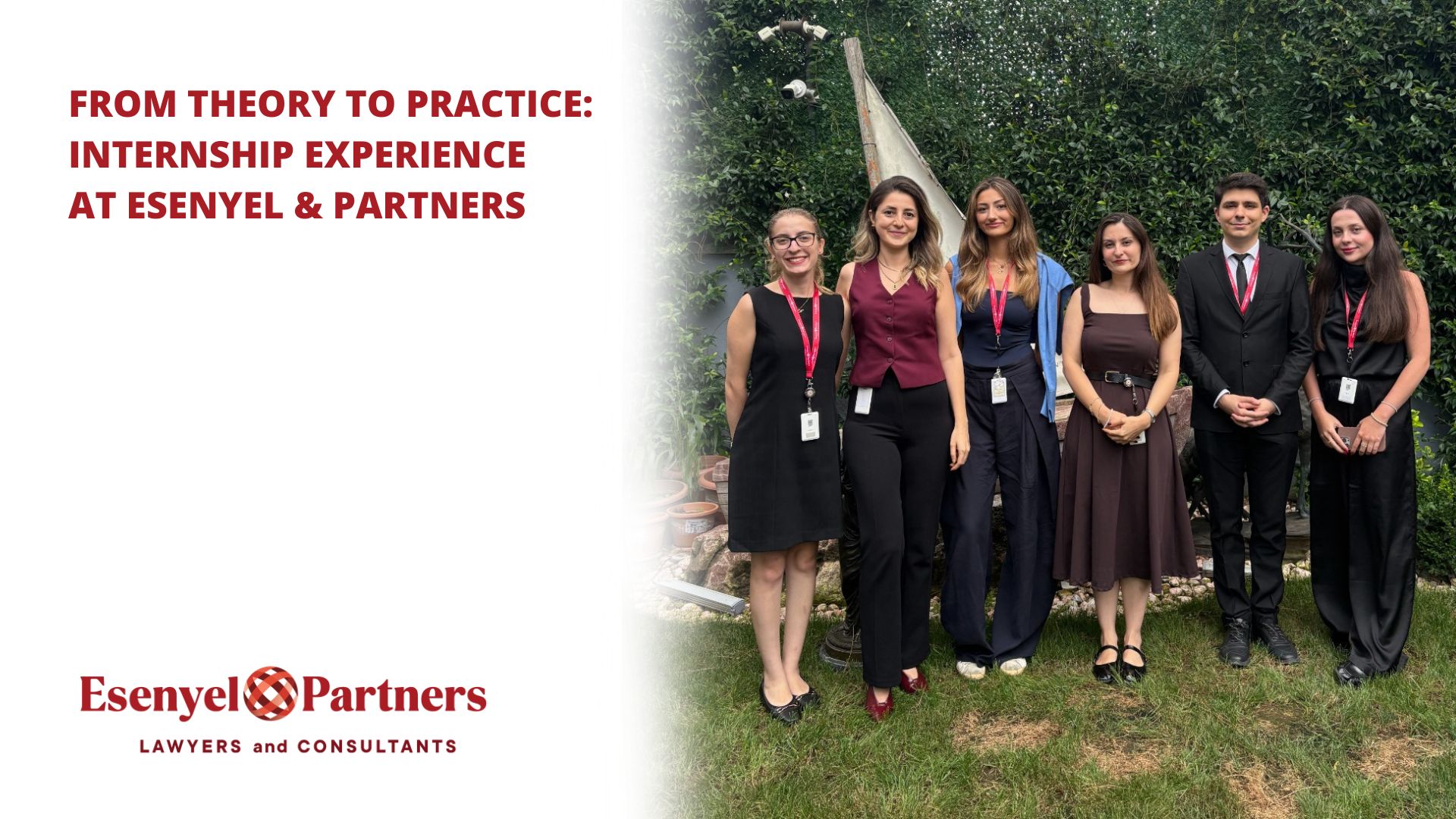
Theoretical knowledge gained at law school provides a strong foundation for professional life. Applying it to real cases, client needs, and concrete legal issues, however, involves a different kind of learning. The internship programme at Esenyel & Partners gives law students a valuable opportunity to bring academic knowledge and professional practice together.
At Esenyel & Partners, we want young lawyers to experience this transition not merely by observing, but by taking part in real work. We believe internships should strengthen their legal analysis skills, client relations, teamwork, and ability to approach legal issues commercially. A key sign of this approach is that many young colleagues who successfully complete our internship programmes can continue their careers with Esenyel & Partners in full-time roles. To understand what this experience means to young lawyers and how it supports their professional development, we listened to colleagues in our internship programme. We asked our interns about moving from theory to practice, working as part of a team, and their views of the profession.
We asked: What was the main difference between the theoretical knowledge you acquired at law school and the practical work you experienced at Esenyel & Partners?
Our legal intern, Şerife Su M., explains that legal practice is not simply a matter of considering statutory provisions; understanding the client’s needs and commercial reality is also an important part of legal work:
The most important difference I saw during my internship was how decisive the human side of legal practice can be. What we learn at law school is largely rule-based. Yet a law firm cannot give sound legal advice without truly understanding its client and the sector in which that client operates. I saw this particularly clearly in maritime matters: I realized that it is impossible to interpret the provisions of a charterparty or a bank guarantee properly without understanding the shipowner’s commercial priorities and how the sector operates.
Şerife also emphasizes that professional practice involves more than legal assessment:
At Esenyel & Partners, I observed that the relationship of trust established with the client, clear communication, and knowledge-sharing within the team directly improve the quality of the work. This was something no class at law school could have taught me.
She summarizes this difference as follows:
In short, at law school the answer ends with legal analysis; at a law firm, however, that analysis must lead to advice that takes account of the client and the commercial reality. Moving from identifying the legal position to offering a practical recommendation was the most valuable thing my internship gave me.
— Şerife Su M.
Şerife’s experience highlights the importance of assessing the legal position alongside the client’s commercial reality.
We asked: What moment made you genuinely feel part of the team while working with Esenyel & Partners?
Our legal intern, Hüseyin Bilgehan G., describes how teamwork and open communication during the internship helped him settle in:
Being able to exchange views with my colleagues during decision-making and then shape our work accordingly was one of the experiences that made me feel part of the team at Esenyel & Partners. Moments like these became more frequent as we took part in social events, and they helped me adapt more quickly.
— Hüseyin Bilgehan G.
Exchanging views within the team enables young lawyers to go beyond merely completing the tasks assigned to them, helping them to see different perspectives and develop their own ways of working.
We asked: What changed your view of law and the legal profession most during your internship at Esenyel & Partners?
Our legal intern, Ece Nur G., describes how applying theoretical knowledge to a real case changed her perspective:
The experience that changed my perspective on law most during my internship at Esenyel was analysing a case file section by section and drafting a pleading on my own. When we broke the file down and examined each part, I saw first-hand how knowledge that had previously remained in a textbook worked in a real case.
— Ece Nur G.
Examining a real case from different angles—identifying the legal issue, reviewing the relevant legislation, and turning the analysis into a concrete written document—allows young lawyers to put theoretical knowledge into professional practice.
An internship is an important stage at which academic knowledge becomes professional practice. It also lets young lawyers experience different dimensions of the profession, including analysis, communication, teamwork, and responsibility.
At Esenyel & Partners, we value young lawyers’ active participation in this process and give them room to develop professionally. We believe the experience gained early in their careers shapes their professional approach in later years.
We thank all the interns who have worked with us during this process for the dynamism, curiosity, and effort they have brought to our team, and wish them every success in their careers.
Your personal data; protecting the privacy of visitors to the website (www.esenyelpartners.com), operated by Company Name (“COMPANY” or “Esenyel Partners” as it will be referred to), as the data controller, is one of the leading principles of our Institution. This Cookie Usage Policy (“GDPR”) explains to all our website visitors and users under what conditions and which types of cookies are used.
Cookies are small text files stored on your device or network server by the websites you visit via your computer or mobile device.
They are generally used to provide you with a personalized experience while using the website, improve the services offered, enhance your experience, and contribute to ease of use while navigating a website. If you do not prefer the use of cookies, you can delete or block cookies from your browser settings. However, we would like to remind you that this may affect your use of our website. Unless you change your cookie settings from your browser, we will assume that you accept the use of cookies on this site.
Depending on the type of cookies used on websites, data regarding your browsing and usage preferences on the device from which you visit the site is collected. This data includes information about the pages you access, the services and products you review, your preferred language selection, and other preferences.
Cookies are small text files stored on your device or network server by websites you visit via browsers. These small text files containing your preferred language and other settings help remember your preferences on your next visit and enable us to improve our services to enhance your experience on the site. Thus, you can have a better and more personalized user experience on your next visit.
The primary purposes of using cookies on our website are listed below:
Session cookies ensure the proper functioning of the website during your visit. They are used for purposes such as ensuring the security and continuity of our sites and your visit. Session cookies are temporary cookies that are deleted when you close your browser and revisit our site; they are not permanent.
These types of cookies are used to remember your preferences and are stored on your device via browsers. Persistent cookies remain even after you close your browser or restart your computer. These cookies are stored in the subfolders of your browser until they are deleted from your browser settings.
Certain types of persistent cookies can be used to provide personalized recommendations based on factors such as the purpose of your use of the website.
Thanks to persistent cookies, when you revisit our website with the same device, it checks whether a cookie previously created by our website exists on your device. If it does, it is understood that you have visited the site before, and the content presented to you is determined accordingly, providing you with better service.
These are cookies necessary for the proper functioning of the website you visit. The purpose of these cookies is to provide the required services by ensuring the functionality of the site. For example, they allow access to secure areas of the website, enable you to use its features, and facilitate navigation.
These cookies collect information about how the website is used, the frequency and number of visits, and how visitors access the site. The purpose of using these cookies is to improve the functioning of the site by enhancing its performance and determining the general trend direction. They do not contain data that can identify visitor identities. For example, they indicate the number of error messages displayed or the most frequently visited pages.
These cookies remember the selections made by visitors on the site for their next visit. The purpose of these cookies is to provide convenience to visitors. For example, they prevent the user from having to re-enter their password on each page they visit.
These cookies measure the effectiveness of the ads presented to visitors and track how many times an ad is displayed. The purpose of these cookies is to provide visitors with advertisements tailored to their interests.
Similarly, they identify visitors’ areas of interest based on their browsing activities and present appropriate content. For example, they prevent an advertisement shown to a visitor from being displayed again in a short period.
To change your preferences regarding the use of cookies or to block or delete cookies, you need to change your browser settings.
Many browsers allow you to control cookies by offering options to accept or reject cookies, accept only certain types of cookies, or be notified when a website requests to store cookies on your device.
It is also possible to delete previously stored cookies in your browser.
If you disable or reject cookies, you may need to manually adjust some preferences, and some features and services on the website may not function properly because we will not be able to recognize and associate your account. You can change your browser settings by clicking the relevant link in the table below.
The Website Privacy Policy is dated 10/10/2024. If the entire policy or specific articles are updated, the effective date of the policy will be updated accordingly. The Privacy Policy is published on the Institution’s website (www.esenyelpartners.com) and is made available to personal data owners upon request.
Company Name: Esenyel Partners
Address: Levent Mah. Sümbül Sok. No: 61 34330 Beşiktaş, Istanbul – Turkey
Phone: +90 506 792 7690
E-Mail: info@esenyelpartners.com
Website: www.esenyelpartners.com